



Application of carboxymethyl cellulose in glue production
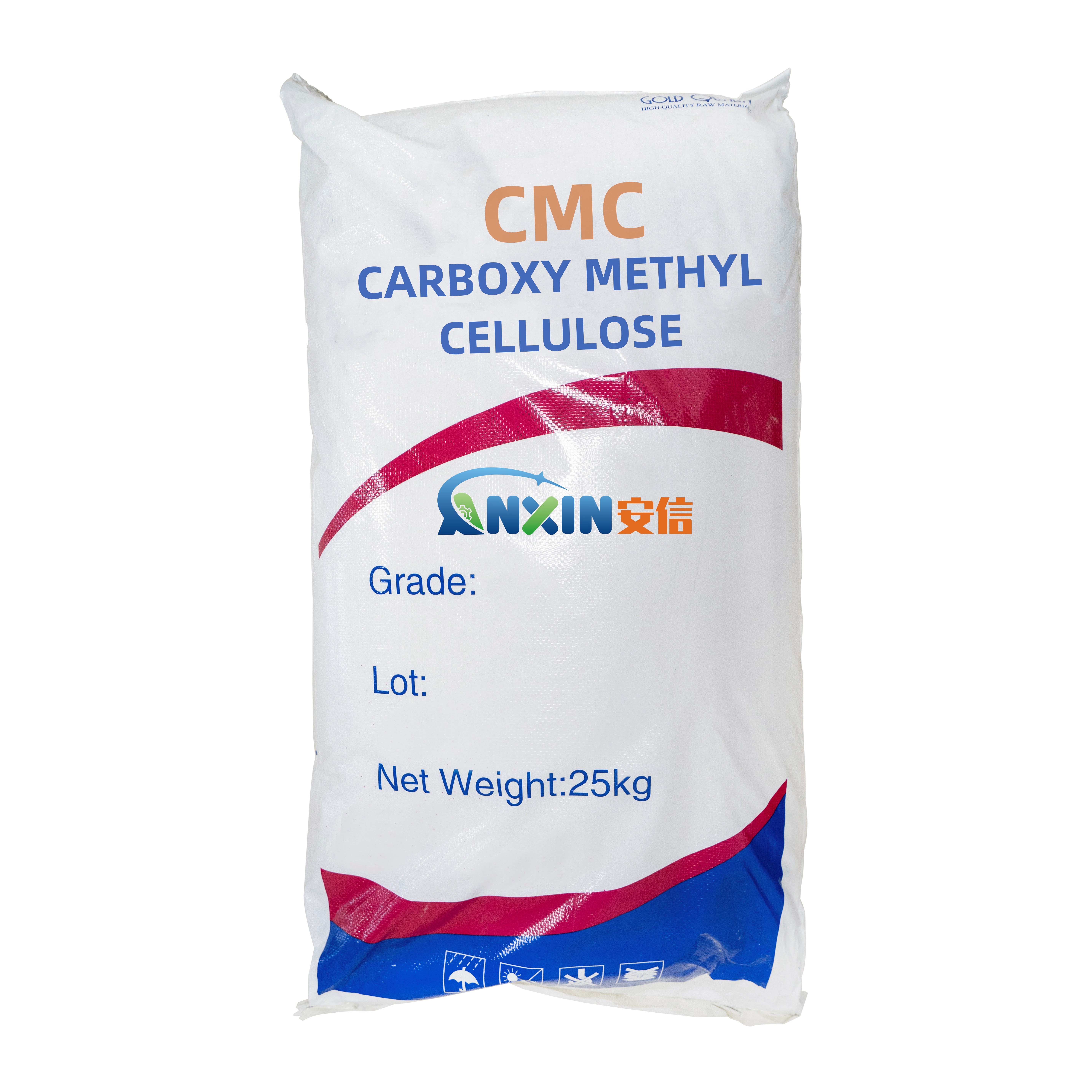
Carboxymethyl cellulose (CMC) is a water-soluble polymer compound derived from natural cellulose. It has good thickening, dispersing, film-forming and bonding properties, so it is widely used in the field of glue production. Its application in glue not only improves the bonding strength and storage stability of the product, but also optimizes the construction performance and user experience. The following is a detailed description of the functional role, application type, advantages and characteristics, and actual cases.
1. The main function of CMC in glue
Thickening and rheological control: CMC has good thickening ability. In the glue system, it can significantly increase the viscosity, improve fluidity and coating properties, and make the glue form a uniform glue layer on the surface of the substrate.
Improve bonding strength: The carboxylmethyl group on the CMC molecular chain can form hydrogen bonds with the surface of the substrate, improving the adhesion of the glue to porous substrates such as paper, wood, and textiles.
Improve water retention: CMC has good moisture absorption and water retention properties, which can reduce water loss during the drying process of the glue, ensure that the glue layer forms a dense and uniform bonding interface, and thus enhance the bonding effect.
Stable colloid system: CMC, as an efficient dispersing stabilizer, can prevent the glue from stratification, sedimentation or agglomeration during storage and use, and extend the shelf life of the product.
Film-forming property: CMC can form a transparent and flexible film after drying, which enhances the durability and crack resistance of the glue layer and improves the overall quality of the glue.
2. Common application types
Paper glue: In paper products industries such as book binding, label bonding, paper tube and carton manufacturing, CMC, as the main thickener and stabilizer, can significantly improve the rheological properties and bonding strength of paper glue.
Wood glue: In the gluing of wood products, CMC can be used in combination with other resins (such as polyvinyl alcohol and urea-formaldehyde resin) to improve the initial adhesion and durability, and at the same time improve the permeability of the glue on the wood surface.
Construction glue: In tile adhesives, wallpaper glues and interior wall putty glues, CMC gives the product excellent water retention and construction performance, preventing the glue layer from reducing the bonding strength due to rapid loss of water.
Environmentally friendly glue: Since CMC is derived from natural cellulose, it has good biodegradability and non-toxicity, and is becoming more and more popular in the field of environmentally friendly adhesives, such as children’s handicraft glue and food packaging glue.
3. Advantages of using CMC
Wide sources of raw materials and moderate cost: CMC is derived from natural plant fibers, the production process is mature, and the cost is relatively low.
Safe and environmentally friendly: CMC is non-toxic and non-irritating, and meets the requirements of environmentally friendly glue for low volatility and formaldehyde-free.
Strong compatibility: CMC is compatible with most common water-soluble resins and additives, and will not have adverse effects on the glue system.
Flexible application: By adjusting the degree of substitution (DS) and viscosity grade, CMC with different properties can be customized to meet the needs of low viscosity to high viscosity glue.
4. Application Examples
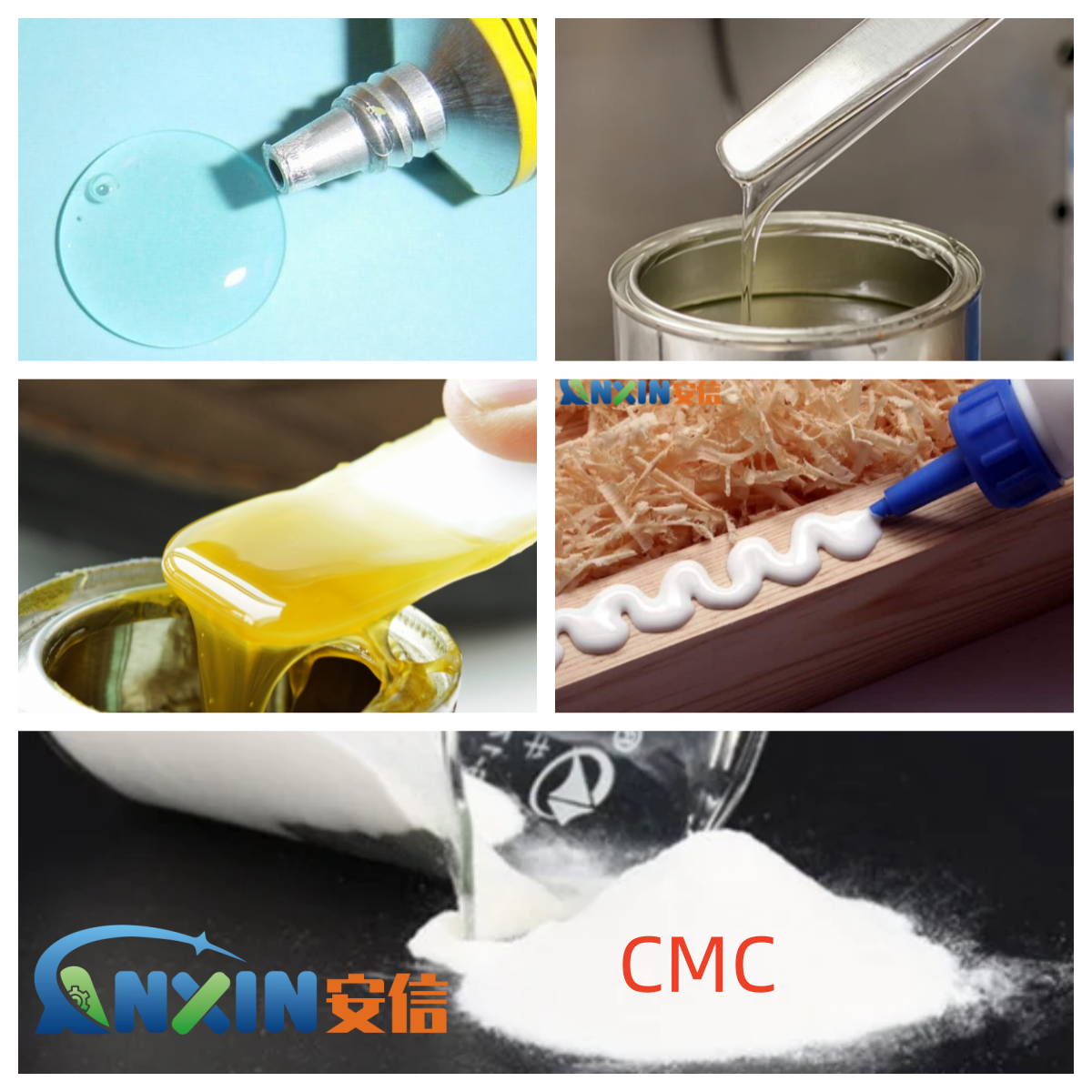
In book binding, adding 0.3%~0.5% CMC to polyvinyl alcohol (PVA) glue can significantly improve its fluidity and bonding effect, and the glue layer is transparent and traceless after drying; adding CMC to wood glue can improve the uniformity of glue coating, reduce glue seepage, and increase the final shear strength; in building wallpaper glue, CMC not only provides excellent water retention and lubrication, but also improves the initial adhesion and lasting adhesion of the glue to the wall base.
Carboxymethyl cellulose plays multiple roles in glue production, such as thickener, dispersant, water retention agent and film-forming agent, which can effectively improve the construction performance, bonding strength and storage stability of glue. At the same time, CMC is green, environmentally friendly, economical and efficient, and meets the dual requirements of performance and sustainable development in the modern adhesive industry. It has broad application prospects in various environmentally friendly glues in the future.
Post time: Jul-25-2025